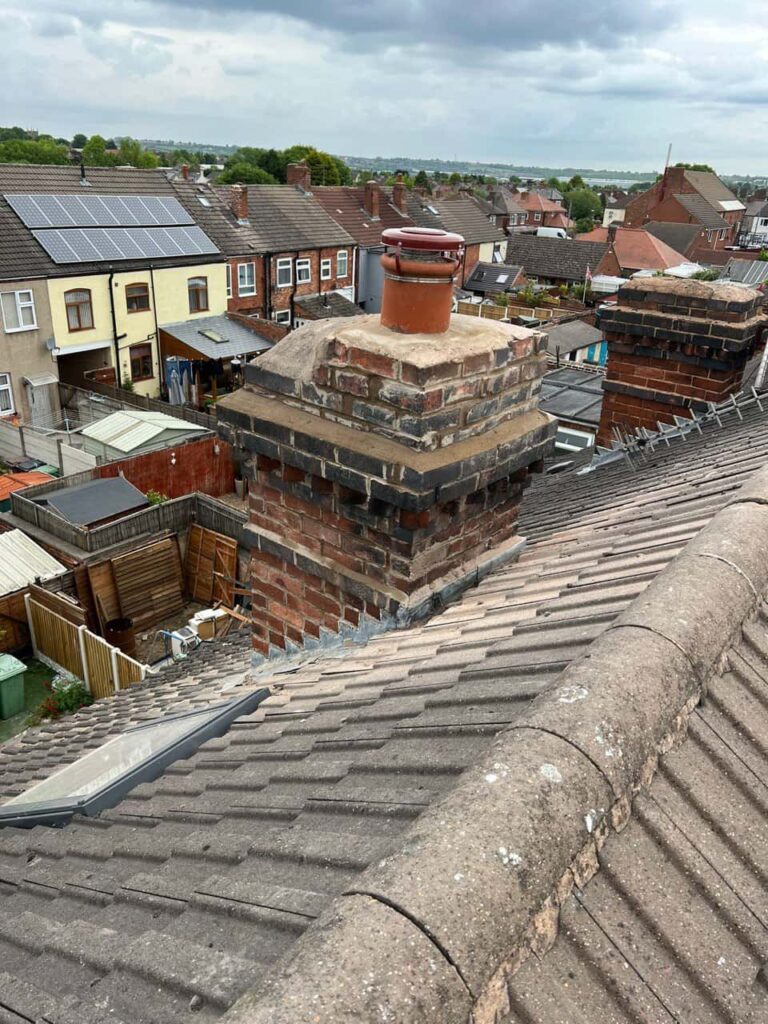
A damp patch on a ceiling can make a roof leak appear straightforward. It is natural to assume that the damaged part of the roof must be directly above the visible staining. In practice, roof leaks can be considerably more difficult to trace. Water can enter through one part of the roofing system, travel along internal components and only become visible some distance away from the original defect.
For homeowners in Gamston, Nottingham, this is why accurately diagnosing a roof leak is just as important as repairing it. At Gamston Roofing Repairs, we assess the wider roofing system to establish where water is actually entering rather than relying solely on where dampness appears inside the property.
Why Is the Internal Damp Patch Often Misleading?
The point where water becomes visible inside a room is usually the end of its journey rather than necessarily the beginning.
Once rainwater passes beneath the external roof covering, gravity and the construction of the roof can direct it along different routes. It may travel before finding a point where it can drip onto insulation, ceiling materials or other internal surfaces.
As a result, the visible damp patch can be some distance from the external defect.
This is one of the main reasons diagnosing roof leaks purely from inside the home can lead to incorrect assumptions.
Water Can Travel Along Roof Timbers
Roof structures contain rafters and other supporting timbers that can influence how water moves.
If moisture reaches one of these surfaces, it may run along the timber before dripping elsewhere. The eventual ceiling stain can therefore appear away from the damaged tile, flashing or junction that originally allowed the water to enter.
An internal inspection may reveal where water is dripping, but further investigation is usually needed to determine where it first penetrated the roofing system.
Roofing Underlay Can Redirect Water
Beneath many tiled and slated roofs is a layer of roofing underlay.
This provides secondary protection if small amounts of moisture get beneath the main roof covering. However, it can also make leak tracing more complicated.
Water may enter through a damaged section higher up the roof, travel across the underlay and escape through a tear, fixing point or deteriorated area further down.
The internal leak may therefore appear beneath the damaged section of underlay rather than beneath the original external entry point.
Sloped Roofs Naturally Encourage Water Movement
Pitched roofs are specifically designed to direct rainfall downwards towards the roof edge.
Unfortunately, the same principle applies when water gets beneath the covering. Moisture can continue moving down the roof slope before reaching an opening through which it enters the roof space.
This means that inspecting only the external roof area immediately above an internal damp patch can overlook the real defect.
Small Defects Can Produce Surprisingly Distant Leaks
The opening responsible for a roof leak does not always need to be large.
A cracked tile, small flashing defect or vulnerable junction may allow relatively limited amounts of water beneath the covering. Once inside, that moisture can travel before becoming visible.
Potential entry points can include:
- Slipped or damaged tiles
- Cracked roofing materials
- Defective flashing
- Roof valleys
- Ridge or verge defects
- Roof junctions
- Areas around penetrations
- Deteriorated flat roofing details
Each of these requires a different type of investigation and potentially a different repair.
Flashing Problems Can Be Particularly Difficult to Identify Internally
Flashing is used to protect vulnerable junctions within a roof.
When flashing develops a defect, water may enter behind or beneath surrounding materials before travelling into the roof structure.
From inside the property, the resulting dampness may not clearly indicate that flashing is responsible.
Professional external assessment is therefore particularly valuable when leaks appear close to roof junctions or other detailed areas.
Valleys Can Carry Significant Amounts of Rainwater
Roof valleys collect water from adjoining slopes, meaning they deal with substantial rainfall during wet weather.
A defect within a valley can allow water to reach the underlying roofing layers. From there, it may travel before appearing internally.
Because valleys interact with roofing materials on either side, accurately diagnosing a leak in this area requires examining the complete detail rather than simply looking for an obvious hole.
Weather Conditions Can Change How a Leak Behaves
Some roof leaks do not appear every time it rains.
The direction of wind, intensity of rainfall and length of the wet period can all influence whether water reaches a particular defect.
For example, a roof may remain apparently dry during light vertical rainfall but develop an internal leak when wind drives water beneath a vulnerable roofing detail.
This intermittent behaviour can make diagnosis more difficult because the internal symptoms may disappear before the roof is inspected.
More Than One Defect May Be Present
An older or deteriorating roof can sometimes contain several separate weaknesses.
Repairing one obvious defect may stop part of the water ingress while another issue remains. This can create the impression that the original repair has failed when the continuing leak is actually entering elsewhere.
Where a roof has experienced repeated leaks, assessing the wider condition becomes especially important.
A professional inspection should consider whether the problem is genuinely isolated or part of a broader pattern of deterioration.
Internal Staining Can Remain After the Leak Has Been Repaired
Another complication is that signs of an old leak do not always disappear immediately after successful roofing work.
Ceiling materials and timbers can retain moisture while drying. Existing staining may also remain visible even though no new water is entering.
This makes it important to distinguish between historical evidence of water ingress and an active leak.
Changes following further rainfall can provide useful information, but the roof itself still needs to be assessed to confirm whether the original defect has been resolved.
Why Simply Repairing Above the Damp Patch Can Fail
A common mistake is to assume that the repair should be carried out directly above the internal staining.
If water has travelled along underlay or roof timbers, work in that location may have little connection with the actual defect.
The visible symptom should instead be treated as one clue within a wider investigation.
A reliable roof leak assessment may involve considering:
- The position of internal dampness
- Roof slope and construction
- Nearby junctions and valleys
- Tile or slate condition
- Flashing details
- Underlay where accessible
- Evidence of moisture movement
- The circumstances in which leaking occurs
Bringing these observations together makes it easier to identify the likely route taken by the water.
Recurring Leaks Deserve a Broader Assessment
If a leak has previously been repaired but keeps returning, repeatedly treating the same visible area may not provide a lasting solution.
Recurring water ingress can indicate that:
- The original entry point was not correctly identified
- Another defect exists nearby
- Water is travelling from elsewhere
- Underlying roofing components have deteriorated
- Wider roof deterioration is developing
In these circumstances, investigating the complete affected section can be more valuable than simply repeating an earlier repair.
Can a Leak Be Localised Even on an Older Roof?
Yes. An older roof does not automatically need replacing because it develops a leak.
If the surrounding roof remains serviceable and the water ingress can be traced to a specific defect, a targeted professional repair may be entirely appropriate.
More extensive roofing work becomes relevant when investigation identifies widespread deterioration, numerous defects or underlying components that are no longer performing reliably.
The condition of the roof should determine the solution rather than the presence of a leak alone.
Why Professional Roof Leak Detection Matters
Finding the actual source of water ingress can prevent unnecessary roofing work and reduce the likelihood of the problem returning.
At Gamston Roofing Repairs, we assess roof leaks throughout Gamston, Nottingham, by considering both the visible internal symptoms and the external roofing system. The aim is to understand how water is entering and travelling before determining what needs to be repaired.
Where the problem is localised, targeted repairs can restore the affected area without unnecessarily disturbing sound roofing. Where wider deterioration is identified, the appropriate extent of work can be considered based on the roof’s actual condition.
Conclusion
Roof leaks can be difficult to trace from inside the home because water does not necessarily travel directly downwards from the point where it enters. It can move along roof timbers, across underlay and down pitched surfaces before finally appearing as a damp patch on a ceiling.
The position of internal staining should therefore be treated as a useful clue rather than definitive proof of where the external defect is located. Tiles, flashing, valleys, junctions and underlying roofing components may all need to be considered before the true source can be established.
If you have noticed a roof leak or recurring dampness at your property in Gamston, Nottingham, Gamston Roofing Repairs can professionally assess the affected area and identify the most appropriate repair. Contact our team to arrange an inspection and ensure the source of the problem is properly investigated rather than simply treating the visible symptom.
Call us on: 0115 647 1193
Click here to find out more about Gamston Roofing Repairs
Click here to complete our contact form and see how we can help with your roofing needs.