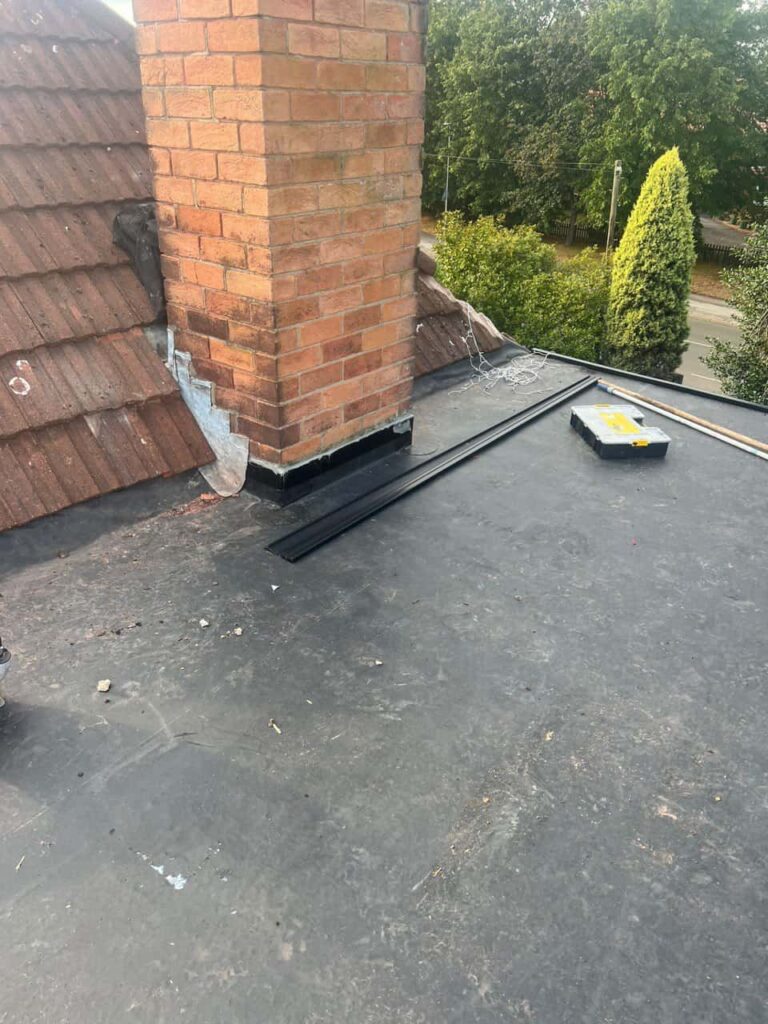
After strong winds or a storm, it is natural to check a roof for missing tiles or obvious debris. However, not all storm damage is visible from ground level. Wind-driven rain can enter through small openings, fixings may loosen beneath the covering, and concealed roofing materials can deteriorate without producing immediate signs indoors.
For property owners in Gamston, Nottingham, understanding how storms affect the complete roofing system can help prevent minor defects from developing into widespread damage. A roof may appear intact while still requiring professional attention.
The Hidden Effects of Wind and Storm Damage
A roof is made up of several connected components. Tiles or slates form the outer covering, but they rely on fixings, battens, underlay, flashing and supporting timbers to remain secure and weather-resistant.
During a storm, changes in air pressure can create uplift around roof edges, ridges and exposed sections. Roofing materials may move slightly without falling away completely. Heavy or persistent rain can then exploit the resulting gaps, allowing moisture to reach areas hidden beneath the roof covering.
Tiles Can Move Without Appearing Missing
A roof tile does not need to fall to the ground to create a weakness. Strong winds may lift or shift it just enough to disturb its overlap with neighbouring tiles.
From below, the roof can still look complete. At roof level, however, the displaced tile may expose a fixing hole, break the weatherproof overlap or create a route for wind-driven rain. Repeated movement can also place additional pressure on the surrounding tiles.
Slight displacement is especially difficult to identify without a close inspection because the affected tile may settle back into a position that looks normal after the wind subsides.
Fixings and Battens May Become Weakened
Tiles and slates depend on secure fixings and sound timber battens. Storm movement can loosen nails, clips or hooks, particularly where materials have already experienced gradual wear.
The visible covering may remain in place temporarily even though its attachment has weakened. This leaves the area more vulnerable during the next period of strong wind.
Moisture entering beneath the covering can also affect timber battens. Because these components are concealed, deterioration may continue until several tiles begin to slip or the roof develops recurring leaks.
Underlay Can Tear or Become Exposed
Roofing underlay provides an additional layer of protection beneath tiles or slates. It helps direct any water that passes the outer covering towards the drainage system.
If wind lifts the roof covering or forces debris underneath it, the underlay can become torn or punctured. Older underlay may be particularly vulnerable if it has become brittle.
Damage to this layer is rarely visible from outside. It may only become apparent when dampness appears in the roof space or rainwater reaches ceilings and insulation. By this stage, moisture may already have travelled away from its original entry point.
Flashing Can Separate at Vulnerable Junctions
Lead flashing and other weatherproofing materials protect the points where different roof sections meet. These commonly include roof-to-wall junctions, chimney surrounds and changes in roof level.
Strong winds can lift an exposed edge or weaken an existing joint. Even a narrow separation can admit a considerable amount of water during prolonged rain.
Flashing defects can be difficult to see from ground level and may initially resemble a problem with nearby tiles. A professional assessment is needed to trace the route of the moisture and identify the actual point of entry.
Ridges, Verges and Roof Edges Can Develop Movement
The exposed edges of a roof often experience some of the strongest wind pressure. Ridge tiles, verge components and perimeter materials can loosen even when they remain visibly aligned.
Mortar may crack beneath a ridge tile, mechanical fixings can weaken, or edge materials may begin to separate from the roof structure. These problems can remain hidden until further movement occurs.
Early attention is important because one unstable component can affect adjoining sections during subsequent storms.
Water Can Travel Before Becoming Visible
One reason hidden roof damage is difficult to diagnose is that water rarely falls directly beneath the entry point. It can follow underlay, battens, rafters or other surfaces before appearing elsewhere.
Possible warning signs include:
- damp patches on ceilings or upper walls
- marks that appear only during wind-driven rain
- musty odours in the roof space
- damp insulation or timber
- small pieces of tile, slate or mortar on the ground
- daylight visible from inside the loft
- unexplained dripping or staining around roof junctions
A dry ceiling immediately after a storm does not necessarily confirm that the roof is unaffected. Small amounts of moisture may be absorbed by hidden materials before visible staining develops.
Why a Professional Roof Inspection Matters
Checking a storm-damaged roof safely and accurately requires more than looking for missing materials. A professional inspection considers the outer covering, vulnerable junctions and accessible areas beneath the roof.
The aim is to establish whether damage is isolated or whether the storm has affected several connected components. This allows repairs to address the source of the problem rather than simply treating an internal damp mark.
Prompt inspection can also identify tiles, fixings or flashing that remain in place but are no longer secure. Correcting these weaknesses can help restore the roof’s weather resistance before further wind or rain causes additional damage.
Conclusion
Wind and storms can affect hidden parts of a roof even when the covering appears complete from the ground. Shifted tiles, loosened fixings, torn underlay, weakened battens and separated flashing can all allow moisture to enter or leave the roof vulnerable to future weather.
If you suspect storm damage at your property in Gamston, Nottingham, Gamston Roofing Repairs can inspect the roofing system, identify concealed defects and recommend the most appropriate repair. Contact our team to arrange a professional roof assessment.
Call us on: 0115 647 1193
Click here to find out more about Gamston Roofing Repairs
Click here to complete our contact form and see how we can help with your roofing needs.